Most small businesses pay for phone lines that nobody uses. A telecom bill audit for small business phone lines often turns up circuits connected to elevator shafts, back-room fax machines, and alarm panels that staff have not touched in years. If your carrier is forcing a POTS migration, those forgotten lines will cost you twice: once for the monthly charges you are still paying, and again when the replacement project uncovers surprises.
This post is for owners and office managers who want a clear process before the work begins. You do not need a telecom engineer. You need your invoice, a notepad, and about two hours.
Why Small Businesses Have Phone Lines No One Knows About
Legacy phone lines accumulate over time. A business adds a fax line in one decade, a dedicated modem for a credit card terminal in another, and a backup line for a security system years after that. Staff changes, and nobody updates a master list.
Carriers often bill dozens of line items under a single account number. Each item may have its own phone number, circuit ID, and monthly charge. Because the total bill is paid as one lump sum, individual lines go unnoticed for years.
POTS (plain old telephone service) lines, PRI circuits (a single digital connection that carries multiple voice channels), and analog lines each appear differently on an invoice. A POTS line is a simple copper pair. A PRI is a trunk that feeds a phone system. An analog line often connects a non-phone device such as an elevator, fire panel, or gate controller.
A common mistake is treating every phone number on a telecom bill as an active line. Many numbers on older accounts are assigned to devices that were removed, relocated, or powered off long ago. Finding them before a forced migration is the whole point of this process.
How to Read Your Telecom Bill and Find Every Phone Line
Pull the most recent three months of invoices. Carriers sometimes list charges in separate sections: local service, long-distance, data circuits, and special access. Each section can hide a line you forgot about.
For each line item, write down the phone number or circuit ID and the monthly charge. Note the service type (POTS, PRI, analog, or DSL) and the service address if the carrier lists one. Some carriers assign a trunk group number instead of a direct number; record that too.
Look for items labeled "special construction," "analog loop," "access line," or "basic exchange." These phrases often mean a POTS or analog circuit that connects a device rather than a desk phone. Also check for minimum-use charges on lines with zero or near-zero call activity. That pattern points to a line that is active but effectively idle.
If the invoice is not clear, call your carrier's business support line and ask for a full inventory of all circuits and numbers on your account. Most carriers can provide this. Get it in writing before you proceed, and confirm that the inventory includes every circuit ID, not just billed phone numbers.
Mapping Lines to Physical Devices and Locations
Once you have the full list, walk the building. Each line needs a physical address: a room, a panel, a device, and a responsible person or department. Do not skip locations that seem unlikely.
Common places to check:
- Elevator machine rooms: most elevators require a dedicated phone line for the cab emergency phone
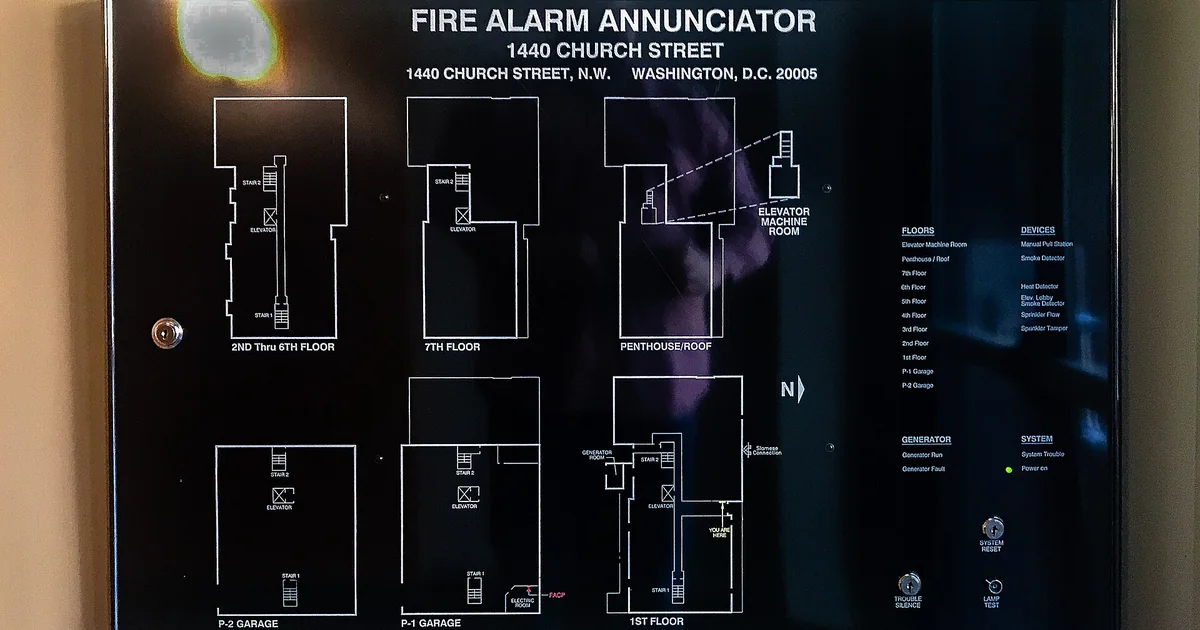
- Fire alarm control panels and central station monitoring systems
- Fax machines, including all-in-one printers
- Security and access control systems, including gate controllers and intercoms
- Analog modems connected to point-of-sale terminals or HVAC controllers
- Back-office DSL lines used as a secondary internet connection
For each device, record the phone number or circuit ID it uses, the physical location, and the vendor responsible for it. Elevator companies and alarm monitoring firms will know exactly which lines their systems require. A line that maps to a device is not automatically one you keep. You still need to confirm whether the device can work on a replacement technology or whether it must stay on an analog circuit.
Compliance Rules That Affect Your Audit
If your business uses a multi-line telephone system (MLTS), two sets of federal rules affect your audit. Under Kari's Law, MLTS systems have been required to allow users to dial 911 directly without pressing a prefix since February 16, 2020. A separate FCC rule required MLTS systems to send dispatchable location to the public safety answering point (PSAP). The FCC defines dispatchable location as a validated street address plus additional information such as suite or floor number needed to identify the caller's location.
For fixed desk phones on-premises, the dispatchable location compliance deadline was January 6, 2021. For non-fixed and off-premises devices, the deadline was January 6, 2022. These dispatchable location deadlines are separate from Kari's Law and apply independently of it.
These rules matter during an audit because replacing POTS lines under an MLTS can change how 911 calls route. The trigger under the federal rules is any new installation or sale after February 16, 2020, not a prior upgrade date. If your MLTS has been modified since that date, consult your vendor or legal counsel to confirm whether the changes bring the system under the current requirements.
When you document each line, note whether it feeds an MLTS and whether that system has been updated to meet both sets of requirements.
Which Lines to Cancel, Replace, or Test
After mapping every line, sort each one into one of three buckets. Work through them in this order so each step is verifiable before you move to the next.
- Cancel: Lines tied to removed equipment, duplicate numbers on the same device, or numbers with no call activity and no known device. Confirm the cancellation on the next billing cycle before moving on.
- Replace: Lines that connect devices capable of working on cellular backup, VoIP, or an analog terminal adapter (ATA). Most POTS line replacement projects move these to a managed cellular or IP solution. Desk phones and voice trunks typically move to a VoIP phone system. Fax lines are strong candidates for eFax services, which remove the need for a physical line entirely.
- Test before deciding: Lines for elevators, fire panels, and alarm systems. These require written sign-off from the device vendor before you cancel or replace anything. The vendor must confirm the replacement technology meets their monitoring requirements and any local code that applies.
Do not cancel an elevator or alarm line without written confirmation from the responsible vendor. Carriers sometimes cut lines on their own migration schedule, so do not wait for them to act first.
Questions to Ask Your Carrier Before You Start
Call your carrier's business account team before or during the audit. Ask these questions and write down the answers along with the name of the person you spoke with. Vague verbal answers are not enough; ask for written confirmation.
- Can you provide a complete circuit inventory for our account, with all phone numbers, circuit IDs, and service types?
- Are any of our lines on a forced migration or discontinuation schedule, and if so, what is the timeline?
- Which lines are POTS, which are PRI channels, and which are analog loops on a larger circuit?
- Are there early-termination fees on any of these lines?
- What service address do you have on file for each circuit?
The service address question matters most. Carriers sometimes list a billing address instead of the actual physical location. A mismatch means your map and the carrier's records disagree, which creates problems if you cancel the wrong line.
Carriers are under real pressure to retire copper infrastructure. Asking about forced migration timelines is not alarmist. It is basic planning, and the answer will shape your project schedule before anything gets cut.
Turning the Audit Into a Replacement Plan
Build a simple spreadsheet with four columns: line ID, device or location, action (cancel, replace, or test), and assigned owner. Share it with whoever manages vendor relationships and facilities. That document becomes your project record and your defense if a carrier cancels a line before you are ready.
Start with cancellations: those lines cost money today and require no technical work. Confirm each one on the following bill before moving to replacements. Group replacement lines by device type. Fax lines move first because the solution is straightforward and does not require a vendor visit. Modems and business phone lines take more coordination but follow a clear path. The post on hidden phone lines in your building is a useful companion to this one and covers what many businesses overlook before a migration begins.
Lines tied to elevators and fire panels need their own track. Coordinate with the inspection vendor, review the most recent inspection report, and confirm replacement options before the carrier acts. For fire alarm circuits specifically, the post on what happens to fire alarms when copper phone lines go away covers the technical options in detail.
A completed audit with a replacement schedule puts you in control of the timeline. Without it, your carrier will make the decisions for you.
Pull your telecom invoice today and start the list. Map every line to a physical device or circuit before your carrier forces the migration on its own schedule. To talk through what you find, book a free 30-minute call with Joshua at Junious Digital Labs.